Showing posts with label canon. Show all posts

Thursday, 16 May 2013

Lens review: Canon 24-70mm f/2.8L II

Hello again readers! Today I will be briefly reviewing Canon's new 24-70mm f/2.8L II zoom lens. This is possibly the most popular lens among photographers, having its versatile focal length as well as a low aperture. There are some people that have built their careers on a full frame camera and this one lens.


With about a 10 year gap from its predecesor, sharper optics, more plastic (good plastic), and more money out of your wallet were added on to this new lens - but with no IS. On the other hand, it weighs reasonably on a camera body unlike the previous version, which was practically rip-your-arms-out-of-your-sockets heavy. Magically, while being shorter and fatter than the old version, this lens weighs 804.5g while the previous version of the 24-70mm weighs 950g. Even though about 1/8 of the weight is lost in this new lens, it really does feel like a big difference when taking it into action. For the same token, Canon decided to throw on a massive filter size of 82mm onto this lens as well.


70mm on f/2.8, Canon 7D (crop sensor)

70mm on f/2.8, Canon 6D (full frame)


Another difference between this lens and its previous version was the reverse zoom - at 24mm, the older version was fully extended while 70mm was retracted. This newer version on the other hand is a lot more conventional - retracted at 24mm and extended at 70mm. The lens hood also moves along with the new version's zoom while the hood stayed fixed as you zoomed in and out. 

The only trouble with this lens was the zoom which tends to be quite tough to move, and the fact that there is also a lens lock, in the situation where someone might keep it in their suitcase when travelling and it might experience a bit of bumping and moving. Other than that, I didn't really see the purpose of a lens lock with an already tough zoom.

For its crazy price tag, there is not one person I know of that has said anything badly about this overall lens - in fact, quite the opposite, meaning that the price you pay is sure worth it. 

Wednesday, 15 May 2013

Lens review: Canon EF 50mm f/1.2L

Hi readers! Today I'll be doing another lens review on my 50mm f/1.2L, otherwise known as a 'nifty fifty'.

The 50mm prime has always been a popular fixed focal length lens for photographers just starting out, or professional. For the beginners, their next step up from their kit lenses are normally the 50mm f/1.8.


I used a 50mm f/1.8 for 3 years and of course, it's definitely a LOT bigger than the 1.2L - it weighs nearly 600g instead of 130g which is a super huge jump in weight when I pick up my camera now. It also has a much bigger filter size of 72mm instead of 52mm.

I wanted to see what kind of results I'd get shooting completely wide open at f/1.2.

Captured on Canon 7D on f/1.2, ISO400 at 1/6400


f/1.2, ISO400, 1/8000

50mm at f/1.2 ISO200, Canon 7D (crop sensor)

50mm at f/1.2, ISO200, Canon 6D (full frame)

Going right in at f/1.2 has the most crazy falloff but of course, focused areas are still tact sharp.


f/1.2, ISO400, 1/1600

Though it is a nice aperture to be shooting at because of the bokeh, I wouldn't risk shooting something that requires lots of movement or something spontaneous. I mostly would use it for some types of portraiture and things that will keep still for a fair amount of time.

As for portraiture, the soft focus on f/1.2 is really elegant. The image below has some awesome bokeh and it was still awesome to get some bubbles tact sharp as well.

With a widest-currently-available f/1.2 aperture, this 50 allows extremely fine control over DOF - allowing the primary subject to pop. An 8-blade circular aperture delivers best-in-class out of focus blur, even when stopped down. This lens allows handholding and action-stopping shutter speeds at very low light conditions. This lens is sure to be a favourite of wedding and portrait photographers, as well as photojournalists. 


f/1.2, ISO400, 1/2500

In a nutshell, the f/1.2 aperture blur is fantastic as you'd expect, especially lower than f/2.8. It focuses on subjects super quickly. But in return, shooting wide open at f/1.2 will leave you with very little in focus, resulting in some shots being softer/more out of focus than expected.

Lens review: Canon EF 100mm f/2.8L


Today I will be reviewing my Canon EF 100mm f/2.8L macro lens! I'm very happy with this purchase because I've been needing a macro quite badly - another prime lens to add to my collection. 


Filter size: 67mm
Size: 77.7mm and 123.0mm (diameter) long
Weight: 623.3g (without hood), 706.9g (with hood)


Most of these were shot on f/3.2 and the bokeh is absolutely beautiful. I could get so much closer and still get so much more detail in things that I've been trying to do with my 50mm but just couldn't get! 


What bugged me about this lens was the long, narrow installed hood that made it very difficult for me to access the lens cap. Adjusting a circular polarizer inside the hood is almost impossible, as your hand completely blocks off the light. However, because of its shape, the lens hood is very protective and useful for this lens. Especially at short macros subject working distances - though the lens hood is easy to bump or scare the subject at these short distances.


100mm on f/2.8 ISO500, Canon 7D (APS-C crop sensor)

100mm on f/2.8 ISO100, Canon 6D (CMOS full frame sensor)


100mm on f/3.2, Canon 7D 


Macro's aren't limited to extreme close-ups -  it also can make a great portrait lens. 

Overall, this particular lens is amazing. The IS works as it's expected to, and the weight is a lot lighter than you'd expect.

Have a good day!

Sunday, 5 May 2013

Amateur Professionals, or Professional Amateurs?

A picture is worth a thousand words - an old adage which is growing in increasing relevance in the age of social media. With the growth of Facebook, Twitter and even YouTube has come an increased desire for sharper images - images that require the average person to wield expensive professional grade equipment. It's this flow on effect that has the professional photography industry in a spin - on one hand, there is less need for their services; on the other, the everyday person now believes they too can make money out of their new toys.

Since this facilitates an increase in questionable pseudo-professionals, are the real professional photographers at risk of receiving less and less work over the years? Even with the upsrise of Instagram, anyone from a beginner to professional level standard is able to not only post photos simply snapped from their mobile phone - high resolution images can also be uploaded to their own profiles if they wanted to promote their work in a socially trendy and high quality way.


There are three tiers of cameras that the typical person is drawn to these days and while they do overlap each other's capacities to some degree, each tier gives a clear indiciation of the person's knowledge and intent.


Canon G12/P6000 (Nikon) buyers are those who know what they are doing and want a capable but small alternative to carring their full kit around all the time. As I've been told, it holds the proficiency of a DSLR but at the size of a point and shoot - small things can pack a punch sometimes.


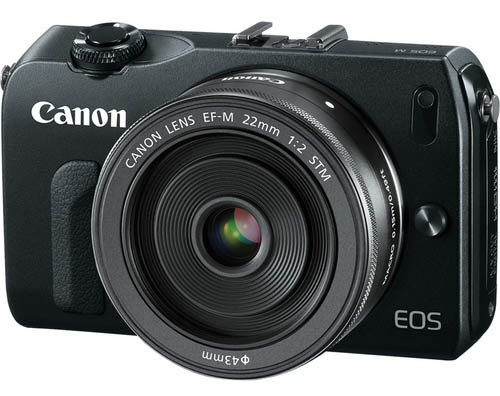
Mirrorless is the average person who wants the increased visual capacity but have no desire to lug the full bulk of a DSLR.


All of the social media sharing and adhoc professional proliferation has allowed for a growing but glaring misconception of photographers  - that equipment is king. There are those out there who will have you believe that simply having a 5D MkIII with an L series lens is the instantaneous key to visual brilliance, neglecting the need for practice and skill.


These self appointed 'professionals' have their belief cemented by a few friends and relatives hitting 'like' on any and every image they choose to upload.
While some of this cohort do make an effort to learn, they continue to base the bulk of their confidence and professionalism on the equipment afforded to them by a good pay check or high credit limit. What does this mean for us? Do you feel that our profession is at risk by these factors?


Friday, 3 May 2013

Photography and Travel (The Essentials)


Aside from the obvious, Camera Body, Lenses etc. there are a few essentials for Travel Photography. Here I will go through the utmost important things that every photographer MUST have when travelling abroad.
1.     Insurance.
Before you even decide just what equipment you will need to take with you when you travel you must ensure that you are covered for any damages, loss etc. for the duration of your trip. Travel Insurance is a must have not only to protect your gear but to protect yourself as well. Make sure you get an insurance that will cover you completely, so that if need be, you can replace your equipment with little to no out of pocket expense to you.
2.     Travel Adapter
Most of the time travel photographers will visit many different countries, all of which have different power ports. It is essential to have at least one universal power adapter to ensure you will be able to recharge your cameras/laptops etc. wherever you may go.

3.     Decent Carry Bag
When travelling with photography gear, you should never send it in with your luggage; there’s no guarantee it will arrive at your destination with you. When you’re carrying thousands of dollars worth of equipment, you want to make sure it isn’t going to go missing; so make sure you take it all as your carry-on luggage.
Even on-board, your bags are going to be knocked about a lot with others pushing and shoving through the plane, trying to get their bags to fit in overhead compartments; so; you’re going to need a decent bag to carry and protect all of your equipment.

4.     Portable Hard Drive
If you’re going travelling, you’re going to be shooting a lot of images right? So, you’re going to need some place to store all your photos while on the go. This is where a portable hard drive comes in handy. I would recommend at least 1TB of space, if not more. To ensure minimal wastage of time, I would recommend you have a decent workflow planned out before you leave for your trip, that way you will be able to plug in your camera, transfer the files then keep on the go. When your trip ends, you’ll have all your photographs organised, and in one place.

5.     Laptop or Netbook
Having a portable hard drive is all well and good, but, you are going to need something to connect it to. You really just need something small and lightweight that you can carry with you to review your images and to transfer and save your images on the go. A netbook is ideal as it is going to be smaller and lighter but a laptop will do the job just fine.

6.     Travel Tripod
Sometimes when travelling, the heavy duty tripod you trust and love is not going to be effective. It will be too difficult carrying around a heavy, not so small tripod while you are on an around the world trip. This is where a travel tripod comes in handy. Small, flexible, lightweight tripods are a lot easier to travel with than your average heavy duty tripod. I recommend Benro Travel Angel Tripods.

7.     Battery Grip/Spare Batteries
The last thing you want when you are travelling is to take out your camera to find, those batteries you thought were fully charged, have been run down. Always make sure you have extra batteries handy, or if you can afford it, a battery grip. I recommend Eneloop batteries as they are proven to keep up to 70% of their charge, even after 5 years.

8.     Extra Memory Cards
Going to be out all day shooting without access to a laptop or hard drive? Then you are going to need extra memory cards; SD, Compact Flash etc. Always make sure you leave for your trip with plenty of memory available, you never know, you laptop might die half way through your trip leaving you with no way of transferring your files.

9.     Card Reader
If you happen to have a professional level camera, it is more than likely going to take Compact Flash cards rather than the normal SD cards… You are going to need to pack your card reader so that your laptop/netbook can access the files on your memory card.

Of course this list doesn't include everything you will need in your pack for your trip, it just covers the essentials. I have also included below what I like to include in my pack when I go travelling.

What’s in my pack?
1.      2 Canon Bodies (5D, 500D)
2.      2 lenses (24-105mm, 70-200mm)
3.      Flash meter
4.       Reflector
5.       Tripod
6.       Laptop
7.       2TB External Hard Drive
8.       Spare batteries
9.       At least three memory cards, 8GB or more
10.   3-4 universal travel adapters
11.   Card Reader
12.   All carried in my trustworthy Lowepro Backpack.